How do we survive this?
Encountering the wisdom of my stone kin.

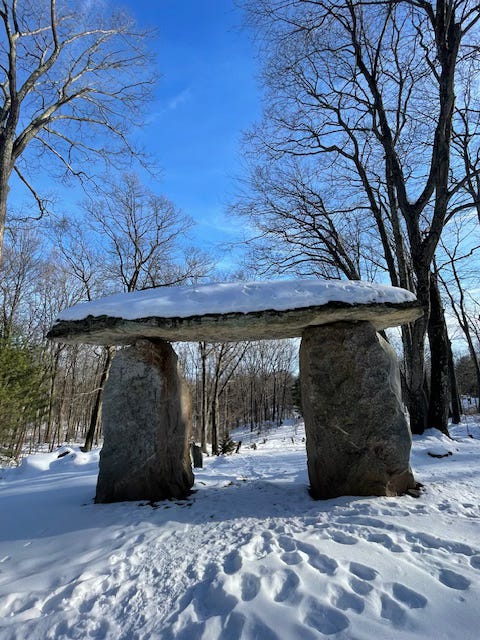
I step out of the car, ice cleats slipped over my boots, bundled in so many layers, I laughingly call myself the Stay Puft Marshmallow Man. Part of me can’t believe I’m here, in the single-digit cold, given my constant protests against the frigid brutality of this winter. But as my friend and I walk through the gate and into the park, where more than 90 ancient stones, in various configurations, have been set throughout the landscape, I feel a thrill of exhilaration.
The sky is a stark and almost cloudless blue. The ground is a pristine white expanse from a recent heavy snowfall. And we apparently have the entire park to ourselves.
We are visiting Columcille Megalith Park, known to some as Pennsylvania’s Stonehenge. Spanning more than 20 acres, the park sits just off the Appalachian Trail on a mountain slope, with hiking paths that wind through a hardwood forest. Its namesake megaliths are tucked among the trails and in clearings where they stand sentinel, singular guardians of the land, or have been arranged as chambers and archways waiting to be discovered, or set in circles that beckon toward some mystical convening.
The park was built by William Cohea over more than two decades, beginning in 1980, with stones that were found either onsite or in local slate quarries, most of them almost 3.6 billions years old. Some stones are named, such as Manan—a 45-ton giant that towers 20 feet in the air. Thor’s Gate is a breathtaking monument, with its two massive stone pillars topped by a horizontal capstone.
As we walk through the park, I can’t help but be enchanted, the cold forgotten as we loop and criss-cross trails, marveling at every formation that speaks of other lands and times. Often I place my hand on the cold, bare rock, feeling for some pulse of connection to something larger, older, wiser. Trusting the frisson that runs through me as acknowledgment from these venerable kin.
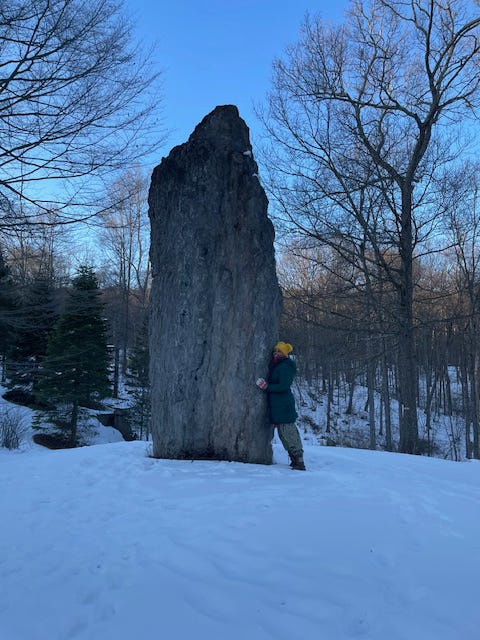
I rest my back against surfaces smooth and craggy. Wanting to feel the support of billions of years behind me. To lean into that intelligence. Imagine all these beings have seen and withstood, and still they stand.
In much of my grief work, especially rituals, I carry stones. I sometimes joke that people will recognize me by the bag of stones with which I walk. I can’t remember if it were during my shamanic apprenticeship several years ago before I read Francis Weller’s “The Wild Edge of Sorrow” and learned of the stone ritual he uses, or afterward, that I began working with these particular ancestors. They now feel like they have always been with me, which perhaps they have, as I remember a trip to Peru almost two decades ago where I couldn’t stop touching the giant stones that shaped so many walls, certain they had stories to tell me.
I bring stones to workshops and the community grief spaces I tend because they feel like supportive allies, a reminder that we, too, can survive the unbearable, learn new shapes and contours in the aftermath of loss. We can also give the heavy we carry to these beings, who have weathered more than we can fathom, been through untold cycles of destruction and rebirth.
And it is this I want to remember each time I make contact with the stones at Columcille. I yearn, too, for more, an expression that bubbles up before we leave when I ask, my face pressed to Manan’s timeworn grooves: “How do we survive this?”
I almost choke on the words. Don’t know a day will come not long after when I will voice in a team meeting, tears streaming down my face, that sometimes the hardest part of moving through the collapse of empire is knowing I may not survive. Yes, I walk with death every day in my bones. Know there isn’t a moment that’s guaranteed. For all of my life, there never has been. But something about living through these times feels more precarious, sobering. I’m not being nihilistic or even fearful. I know there are maps, lineages, signposts — longstanding frameworks for resistance from Black feminist, Indigenous and anti-colonial thought. I also know our roles in the revolution are not all the same, not all weighted toward the front lines.
Still, I hold the tenderness of being a Black body in the desperate clutches of white supremacy’s last gasp. But more than that, I am sitting with what it truly means to stand with and for our neighbors, to protect each other, to root in our collective survival — and, from that orientation, to trust in the clarity and courageous way-making for life beyond the forces entrenched in conspiring toward violence and destruction. Even if I do not live to see this life.
“How do we survive this?”
I don’t receive a response. Feel only the sturdiness of presence. A depth of support. Centuries and centuries of witness and struggle, ruin and triumph pressed along the length of me. Tears prick my eyes. In that moment, it’s enough, to be held by this vast history, to face forward from this immensity.
I thank my stone relative, linger in that field of gratitude as the sun begins to sink in the sky, stippling the trees with gold.
And then my friend and I are on our way to dinner.
It is the following day, in a patch of quiet as I drive without the distraction of the radio or my phone, that the words from stone find me. Or maybe from my own heart, carrier of a wisdom that perhaps needed some activation from this sanctuary of ancient beings.
“Survival isn’t the question,” I hear. “Move to become a good ancestor. Be who the future ones will remember and invoke, feel at their own backs an unyielding, vigorous love.”


[Last year, The Philly Download, an online news source devoted to journalism and media that center Black life in the Philadelphia area, invited me to offer a meditation for resourcing with ancestral support during these turbulent times.
If you’re wondering what support or wisdom your ancestors may have to offer and would like to read or listen to the meditation, you can find it here.]
Tune into this conversation with Lisa Keefauver
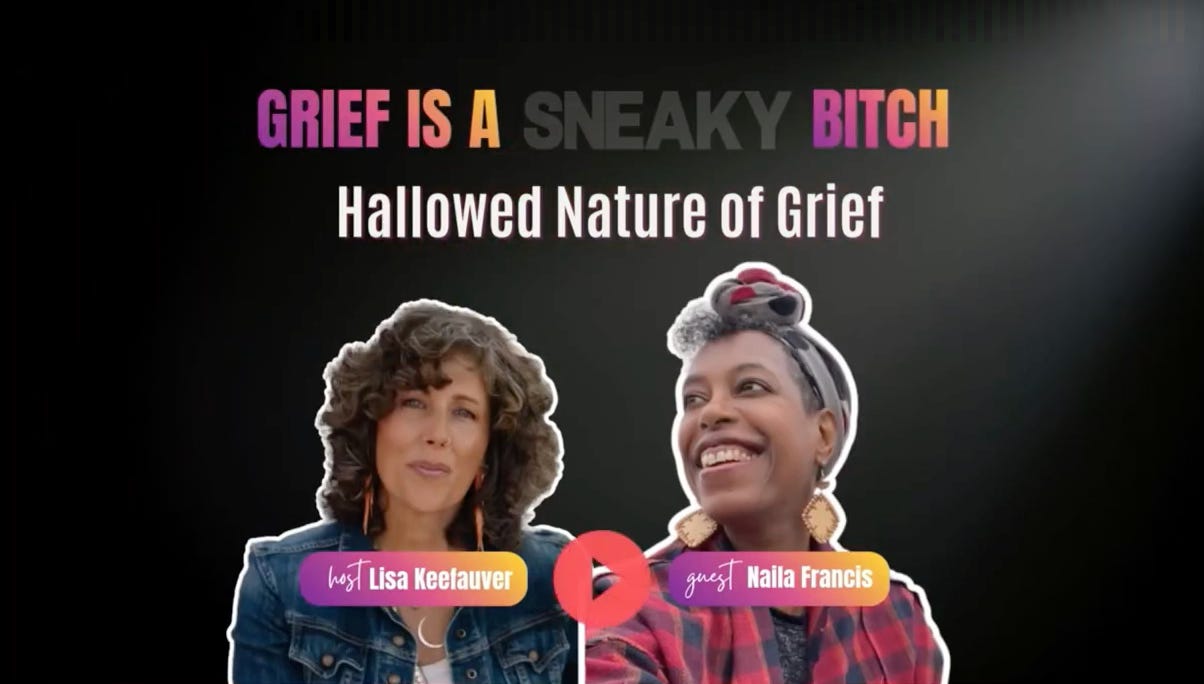
It was truly such a joy to sit down with Lisa, host of the Grief is a Sneaky Bitch Podcast, for this episode. Lisa brings such genuine curiosity and care, realness, joy and warm-hearted presence to her conversations. I was absolutely delighted that Sarah Davis and I got to interview her when we hosted the Breathing Wind Podcast, and I was thrilled to spend more time with Lisa, talking about the ways beauty, poetry, the more-than-human world and radical honesty can support us in our grief.
You can tune in here to the episode, “Hallowed Nature of Grief,” or listen wherever you get your podcasts.
Looking for a soulful political home?
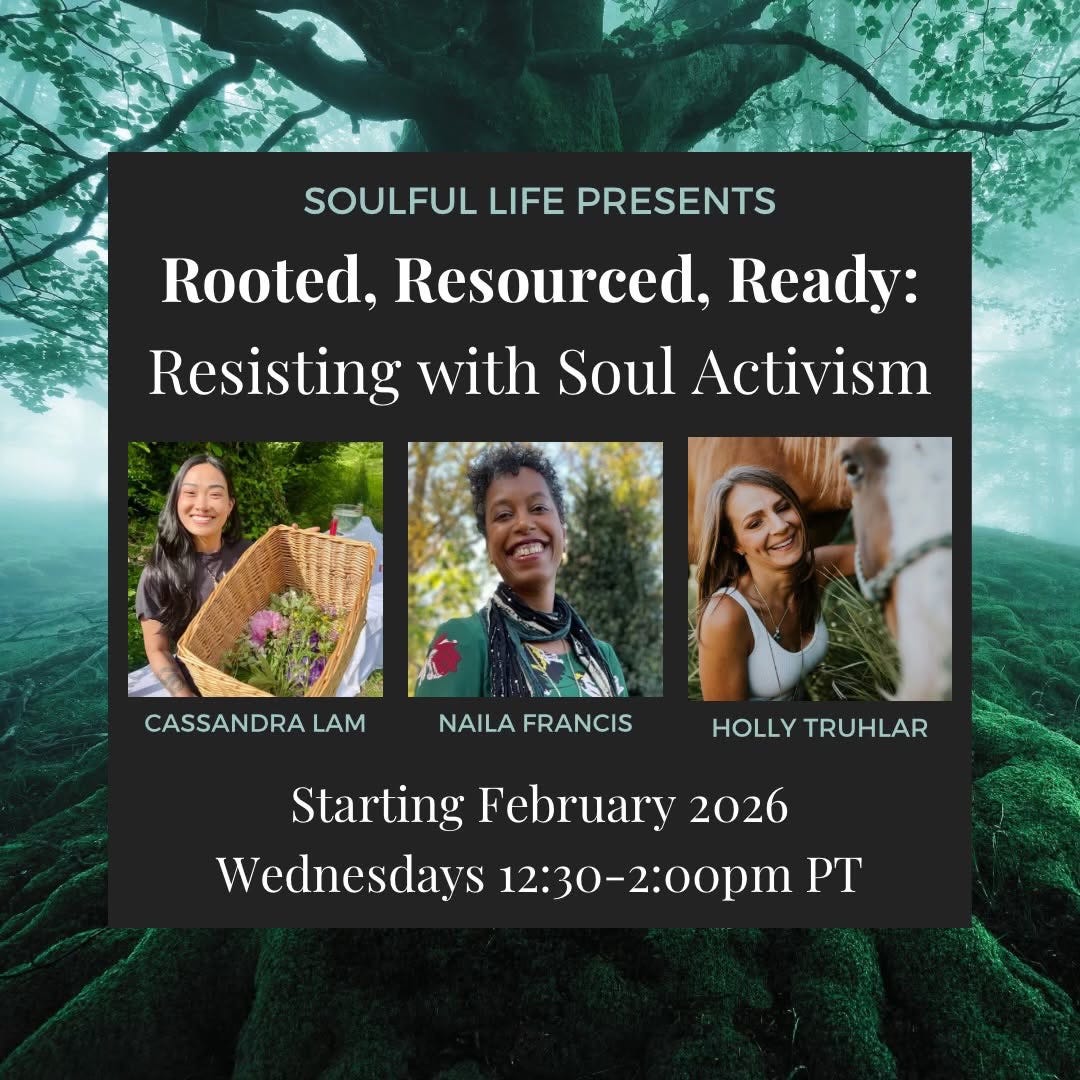
Do you ever feel like you’re too spiritual for political spaces and too political for spiritual spaces? The Soulful Life Network, which I co-tend weekly with Holly Truhlar and Cassandra Lam, is an online community that makes space for both.
Our newest series, Rooted, Resourced Ready: Resisting with Soul Activism, is especially dedicated to cultivating a soulful, political home where we can learn and grow together as a village of resistance, meeting these times from a place of relationality, embodiment, ritual, imagination and ancestral practices alongside political analysis and activism.
There’s still time to join this series, which will run through May. Learn more here.
The Heart is a Frontline begins in March

If you’re feeling called to hold space for the grief, holy outrage and complexity of these times, this nine-month Politicized Grief Ritual Leadership Training is designed to help you build these containers with rigor, skill and care. To learn more about the training, I invite you to read this deeply layered, potent and incisive piece by Holly Truhlar, who put together our team, which also includes Tajah Schall and Jessi Rado. You can also read more about the training and sign up here.
Save the date to walk with the Philly Goat Project
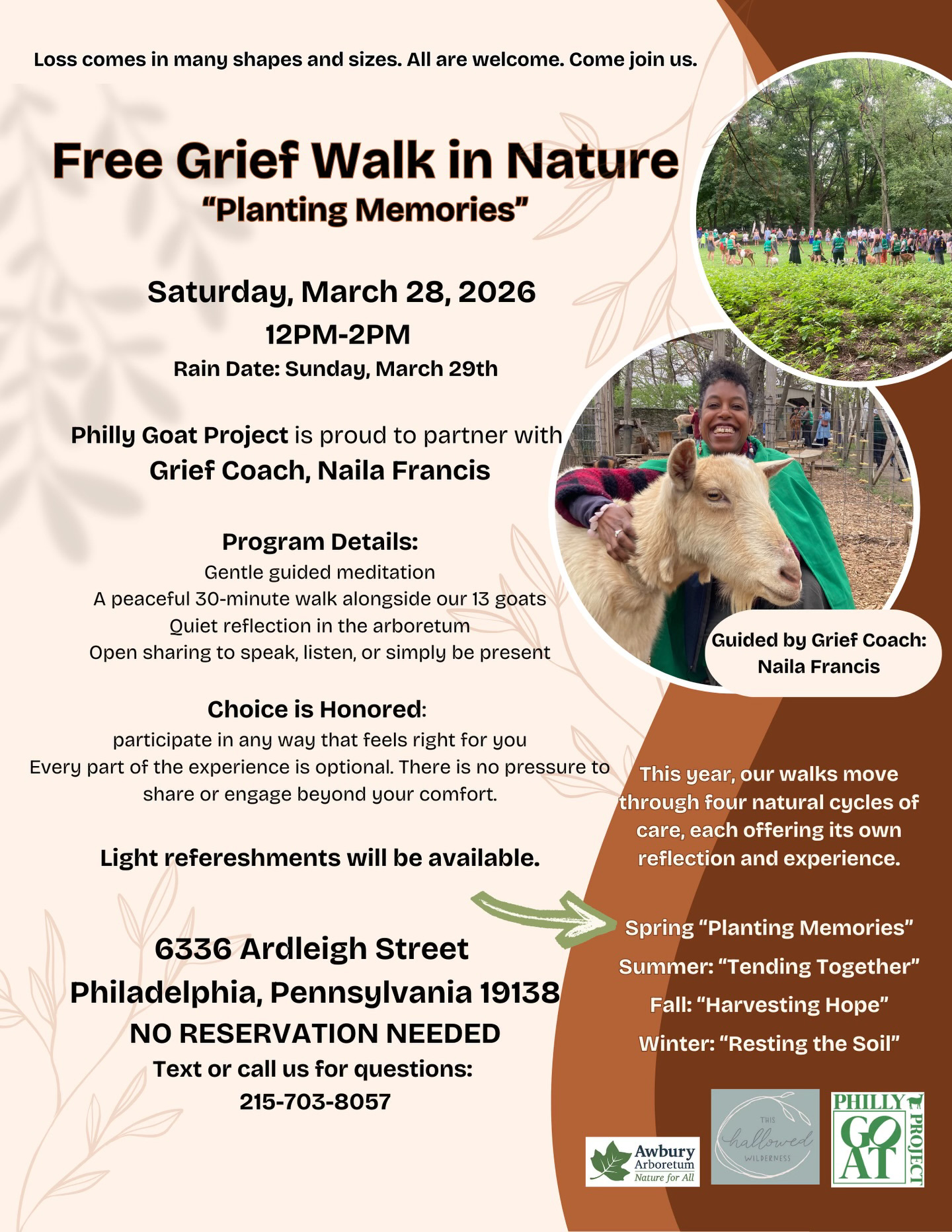
This remains one of my favorite community grief-tending spaces. You don’t have to be a lover of goats to join. They’re with us for part of the walk but the invitation is really a time to be with and move your grief in nature and community.
Additional events
If you’re in the Philadelphia area, join me and Salt Trails this Friday, February 20, for Singing Our Grief. We gather from 7-8:30 p.m. at Chestnut Hill United, 8812 Germantown Avenue, Philadelphia. Sliding scale: $10-$30 payable in person or via Venmo to Naila-Francis
On March 7, I’ll be talking about grief as part of the panel discussion at A Date with Sis, a women’s wellness and empowerment experience, in Westampton, N.J. Learn more and get your tickets at this link.
Incredibly beautiful and moving, as always! 💕
so glad this is what came out of that glorious time together. as Bill would say, "sometimes the way it looks is not the way it is at all." just a cold walk in a megalith park, yet so much more! xo